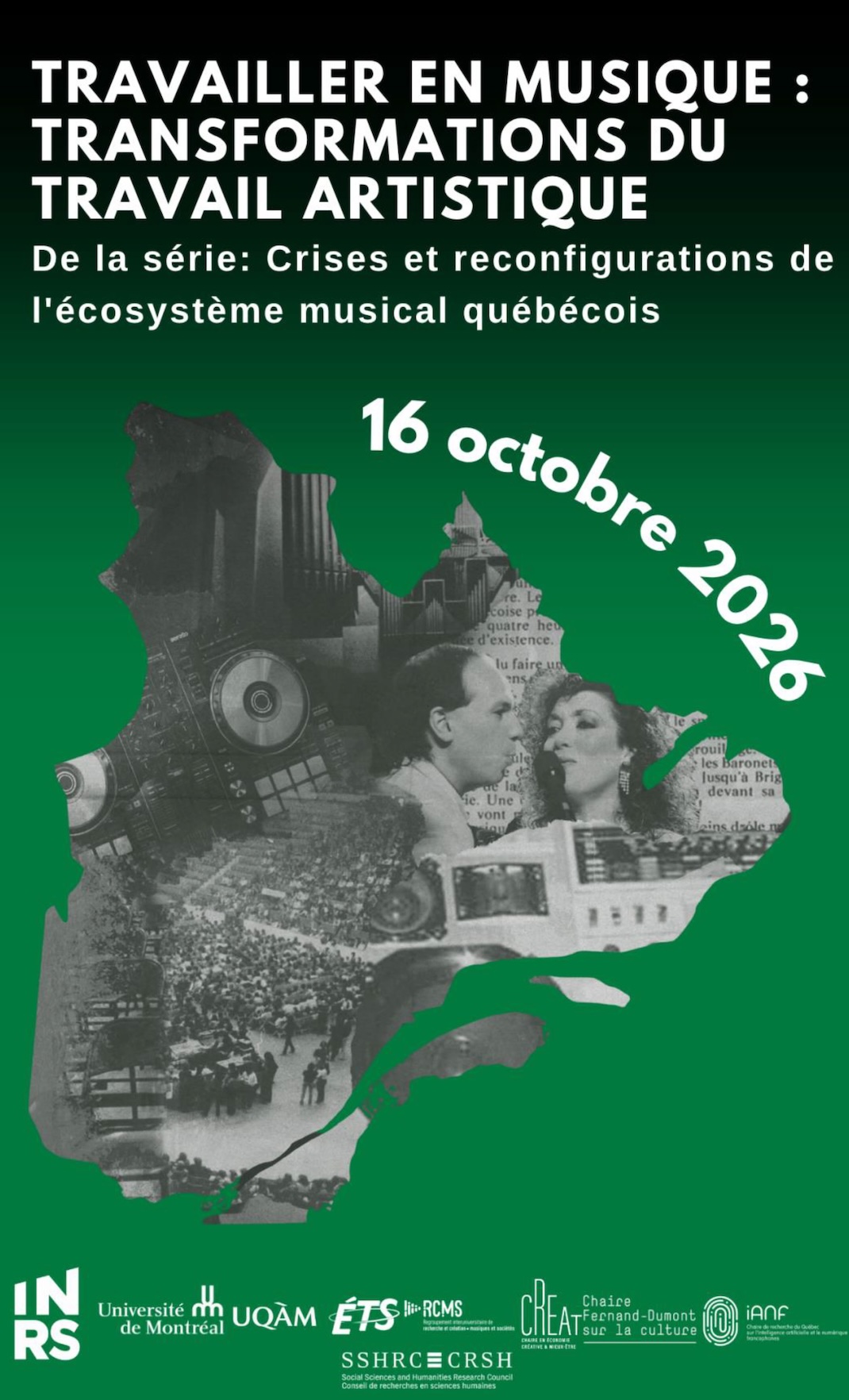

Study Day 3 > Travailler en musique : transformations du travail artistique
What does it mean to make a living from music today? How are platforms, the pandemic, and funding structures reshaping the work of musicians?
This third research symposium will bring together researchers and people working in the music industry to explore changes in artistic work. Presentations will examine how crowdfunding platforms such as Patreon are reshaping creative practices; L’Ampli de Québec’s 16 years of supporting emerging musicians from Québec City and Wendake; what pandemic lockdowns revealed about musical work; the growing diversity of career paths; and how arts funding models have fragmented the music community.
Program
9:00–10:00 a.m. — De la création musicale à la création de contenu, comment la plateforme Patreon reconfigure-t-elle les pratiques créatives des musicien×nes ?
With Elsa Fortant (INRS)
10:00–11:00 a.m. — L’Ampli de Québec : 16 ans à soutenir le développement des artistes en musique
With Guillaume Tardif (Ampli)
11:00–11:15 a.m. — Break
11:15 a.m.–12:15 p.m. — « Le coeur parle avant la technologie » (?) Analyser le travail musical à la faveur d’un confinement sanitaire
With Irina Kirchberg (Artenso)
12:15–2:00 p.m. — Lunch break
2:00–3:00 p.m. — Vivre de la musique au Québec : l’éclatement des profils de carrière
With Danick Trottier (UQAM)
3:00–4:00 p.m. — Fragmenter pour mieux régner : où l’impérieux besoin d’autonomie artistique transposé dans le financement des arts
With Michel Duchesneau (Université de Montréal)
4:00–4:30 p.m. — Break
4:30–5:15 p.m. — Grand témoin
Detailed Program
Register
Study Day News
—
This event is part of the Crises et transformations de l’écosystème musical québécois study-day series, taking place at several Montréal universities from September to December 2026, with support from the Social Sciences and Humanities Research Council of Canada’s (SSHRC) Connection Grants.