
3 November 2023
 Digital Creativity
Video games still too often convey limited representations in terms of gender, race, sexuality, and more. Studies have shown that these representations reflect the lack of diversity within production teams. When teams remain homogeneous, video game productions tend to reproduce unconscious biases in their works, whereas diversity allows creators to move beyond preconceived ideas. However, existing research does not explain how diversity is actually incorporated into the design process. Scholars often seem to assume that simply bringing together individuals with varied life experiences will naturally lead to different kinds of games.
This project, focusing specifically on the situation of women in the video game industry, proposes to rethink game design methods in order to value the lived experience of designers. The goal is to ensure that these experiences are integrated into the creative process and reflected in the resulting works.
In the current context, women — as well as other marginalized groups — who wish to create games must do so using tools and processes that do not take into account their worldview or lived experience within society. As a game designer and researcher, I aim to challenge this status quo by conducting a research-creation project that involves designing a video game based on my experience as a woman, and making explicit how this experience informs my design practices.
How do we reflect on our personal experience during the game creation process? How do we transform it, integrate it into a work?
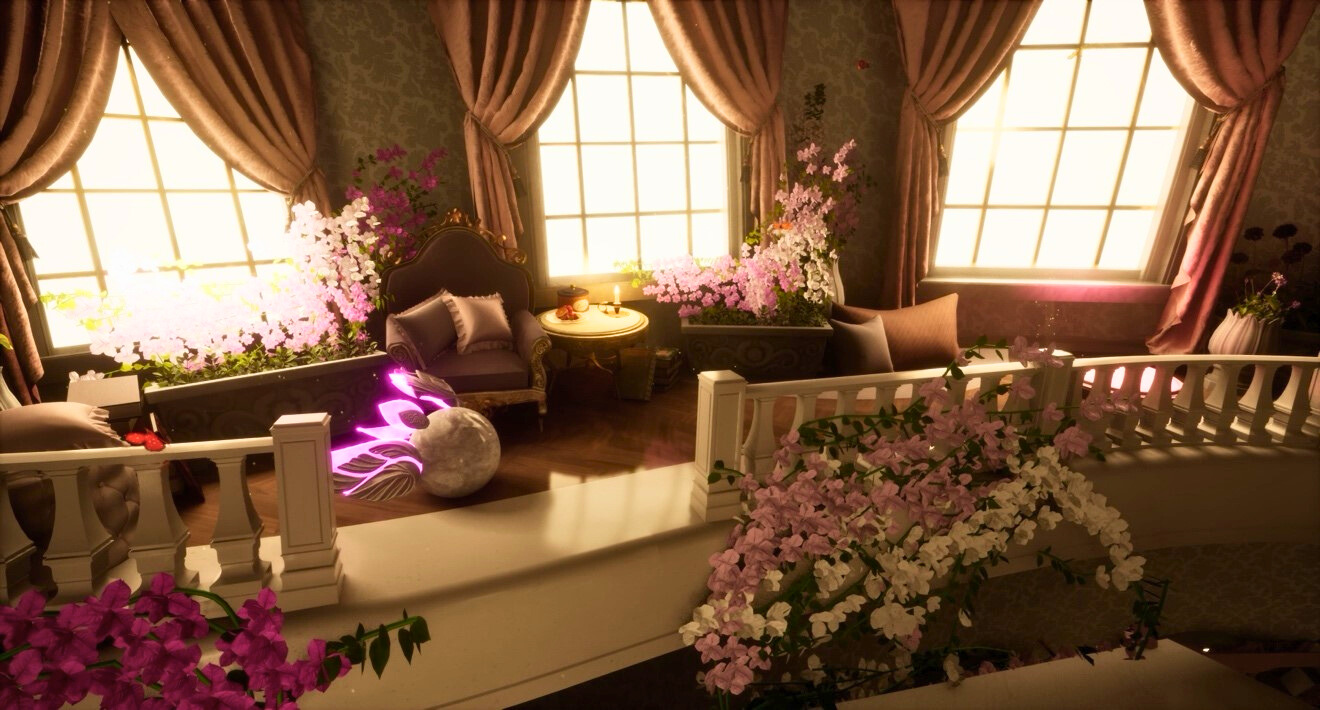
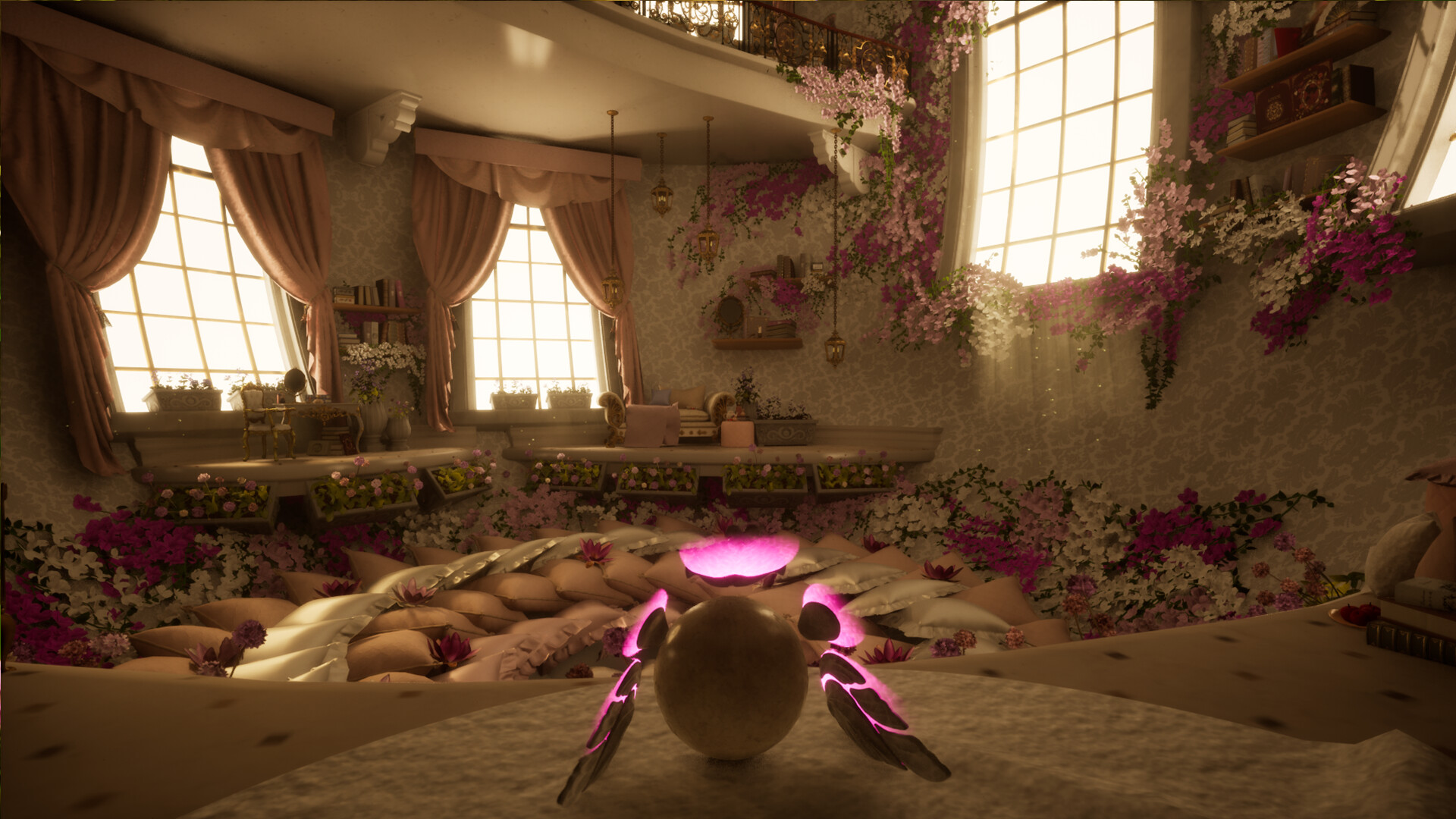
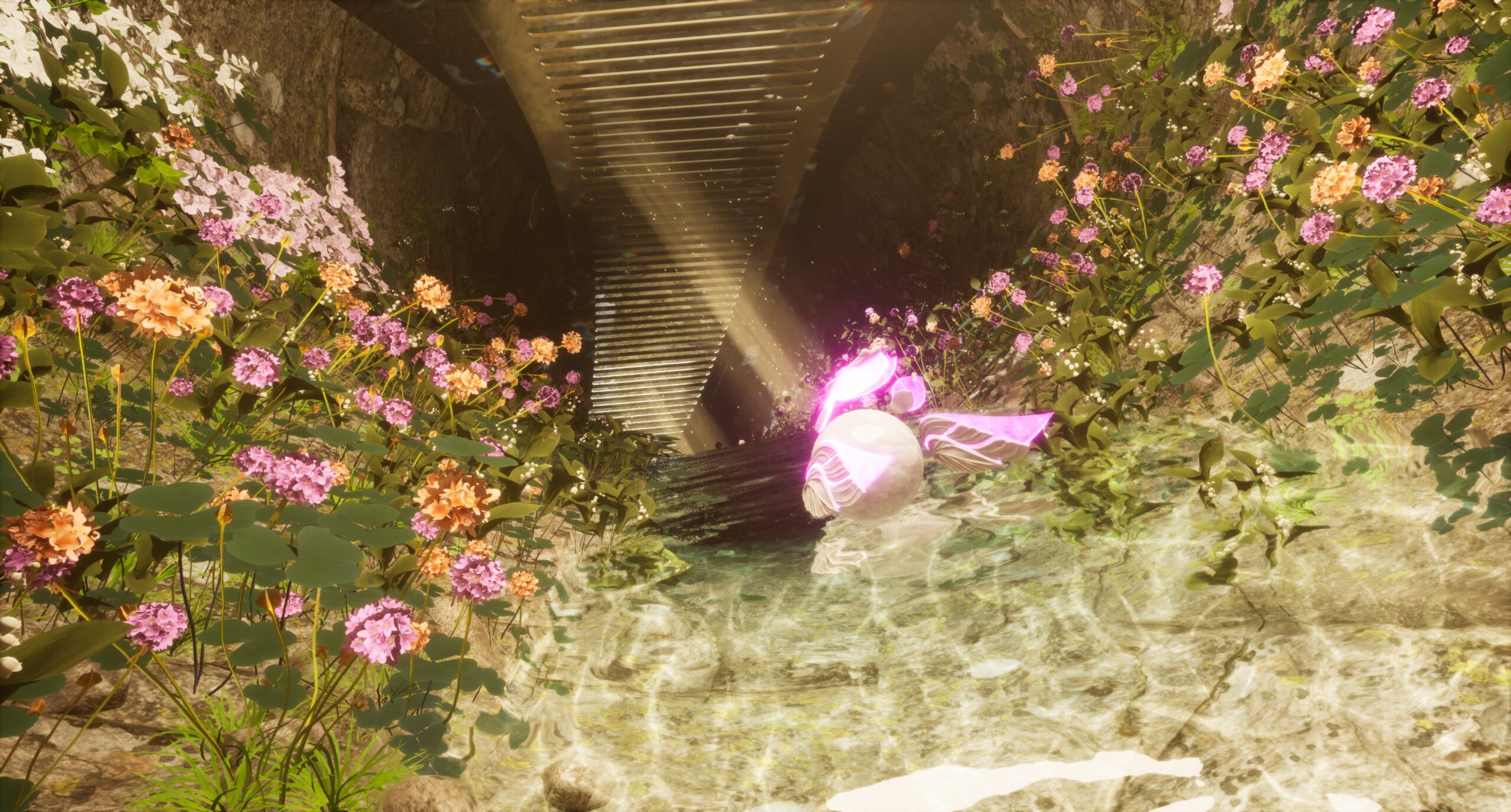
The first outcome of this research is the exploration game “CLTRS”.
“CLTRS” is experimental in both its design and its intent. It challenges dominant ideas about what games can be by centering underrepresented experiences and rejecting conventional gameplay structures. Its symbolic interactions and intuitive mechanics offer a unique gamefeel that encourages introspection rather than mastery. By openly acknowledging the positionality of its creative director and embracing a feminist lens, “CLTRS” resists the illusion of neutrality in game development and expands the boundaries of video games as a creative and reflective medium.
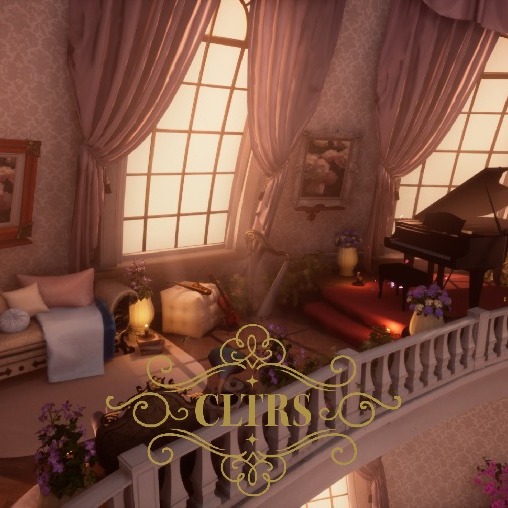
Credit | "CLTRS", research project by Laureline Chiapello, NAD-UQAC
News
EVENTS
14 August 2025 – 28 August 2025
[ Entrée libre ]
Montréal
Digital CreativityCLTRS in the Hexagram selection at the Village Numérique of the MUTEK Festival
24 March 2025 – 31 March 2025
Montréal
Digital CreativityGame design to raise awareness and prevent gender-based and sexual violence
17 November 2023 – 17 November 2023
Japan
Digital CreativityLaureline Chiapello, head of Digital Creativity Axis, presents the first demo of her video game on female pleasure, in Japan
30 June 2025 – 4 July 2025
Malta
Digital CreativityInternational and Local Reach of Research-Creation in Digital Creativity
Publications
Exprimer, expérimenter et critiquer. Le jeu vidéo.CLTRS.
Digital CreativityChiapello, L (2025). Exprimer, expérimenter et critiquer. Le jeu vidéo.CLTRS [communication orale]. Conférence spéciale en design de jeux, Haute Ecole Albert Jacquard, Namur, Belgique.
L’artgame : un espace convenable pour un jeu inconvenant (CLTRS)
Digital CreativityChiapello, L. (2024). L’artgame : un espace convenable pour un jeu inconvenant (CLTRS) [communication orale]. Colloque ARTGAME, Montréal, Canada.
CLTRS
Digital CreativityChiapello, L. (2023, 11-15 november). CLTRS. [Video Game 3D]. International Conference on Interactive Digital Storytelling 2023 Art Exhibition, Kobe, Japan. https://icids2023.ardin.online/
CLTRS
Digital CreativityChiapello, L. (2025, November 14). CLTRS [Demonstration]. Pixels and Poutine, Montréal, Québec, Canada.
CLTRS
Digital CreativityChiapello, L. (2025, August, 14-28). CLTRS [Exhibition]. Village Numérique, MUTEK, Montréal, QC. Canada. https://village-numerique.mutek.org/fr/parcours/espace-innovation
Latest Podcasts & Videos
Perspectives and the Future of the Creative Economy
23 March 2026
Students from CREAT share their perspectives and research. From regional culture to the arts and health, as well as digital creativity and discoverability, these intersecting viewpoints offer an inspiring glimpse into the future of the creative economy and its impact on collective well-being.
Understanding the challenges of discoverability to make music accessible
16 March 2026
At the intersection of migration trajectories and Québec’s cultural ecosystems, this episode explores the priorities that should guide efforts around discoverability. Caroline Marcoux-Gendron, Affiliated Professor at the Université du Québec à Montréal, and Romuald Jamet, Associate Professor at INRS, discuss the distinctive features of Québec’s music landscape: its linguistic, institutional, and cultural dynamics, as well as the recognition biases that affect, among others, artists from immigrant backgrounds.
CREATivity in Action: Stories of Digital Practices
9 March 2026
Digital creativity is transforming the ways we produce and interact. Two researchers from CREAT—Philippe Vaucher, professor in the Unité d’enseignement et de recherche en création et nouveaux médias at the Université du Québec en Abitibi-Témiscamingue (UQAT), and Louis-Philippe Rondeau, also a professor at the École des arts numériques de l’animation et du design at the Université du Québec à Chicoutimi (NAD/UQAC)—shed light on current innovations in this field.